



Core Components of a Visual Arts Education Curriculum
A well-designed visual arts curriculum does more than teach students to draw or paint. It nurtures creativity, critical thinking, and cultural awareness. Modern schooling often emphasizes test scores, yet students thrive when their creative faculties are engaged. Visual arts education develops problem-solving abilities, emotional intelligence, and the ability to interpret complex ideas.
Integrating art into education also supports cognitive growth. Studies show that students engaged in the visual arts perform better in reading, math, and spatial reasoning. Beyond academics, art fosters cultural literacy. Exposure to diverse artistic styles and traditions helps students understand history, society, and human expression.
This blog will outline the core components of an effective visual arts curriculum. From foundational skills to contemporary digital practices, educators can design programs that balance technical expertise with personal expression. Students can emerge confident, versatile, and prepared for creative challenges.
Foundational Knowledge in Visual Arts
Foundational knowledge in art forms the backbone of any visual arts curriculum. Without technical skills and theoretical understanding, students may struggle to communicate ideas visually. Foundational learning includes basic techniques, art theory, and historical context.
Core concepts such as color theory, composition, perspective, and form provide a shared language for artistic expression. Understanding these principles enables students to make intentional artistic choices rather than relying on chance. Art history further enriches this foundation, offering context and inspiration for contemporary practice.
Building Technical Skills
Developing technical skills is central to a visual arts curriculum. Students should begin with hands-on experiences in drawing, painting, and sculpture. Early exercises focus on line, shape, tone, and texture.
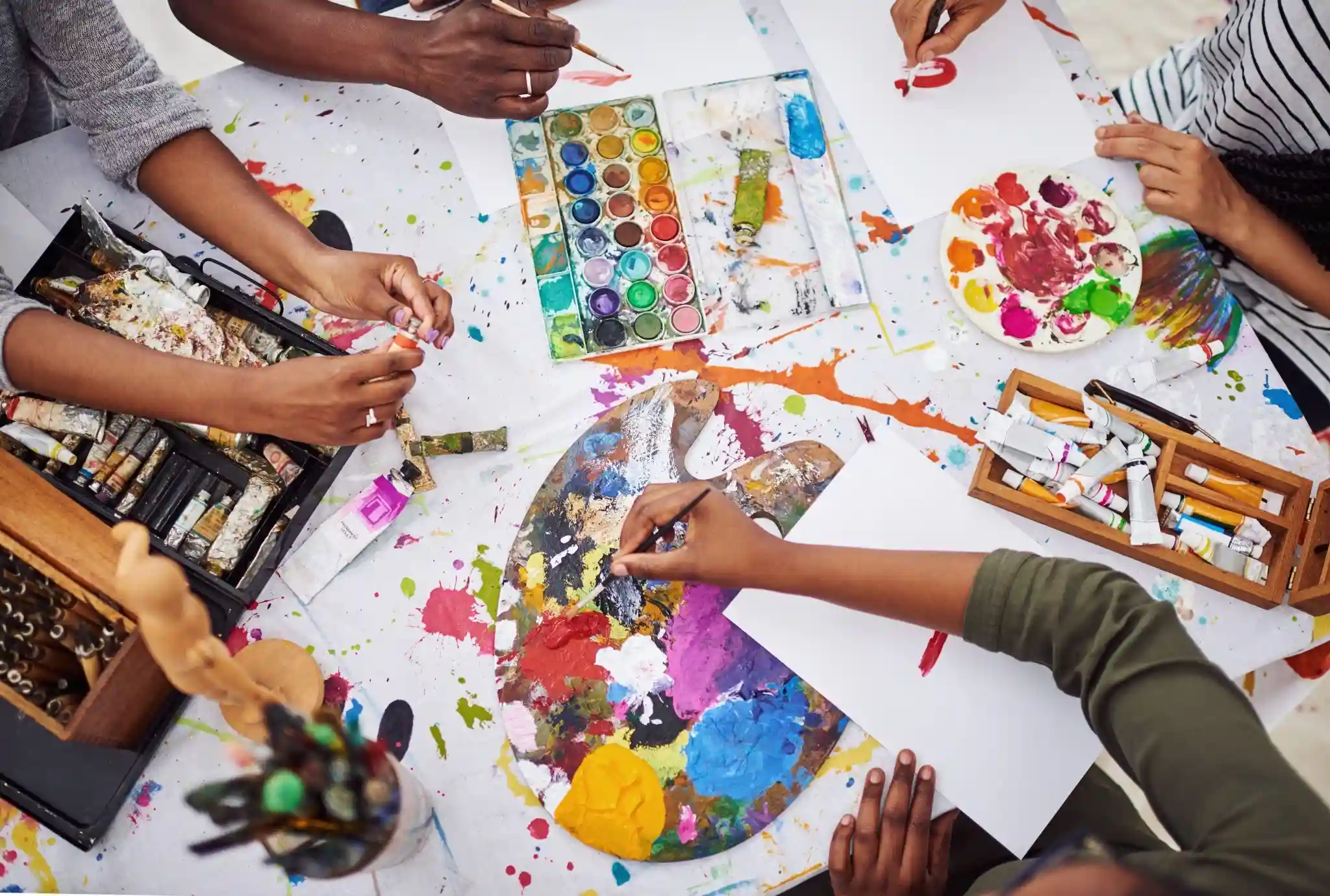
Experimentation with various materials encourages adaptability. Using clay, charcoal, watercolor, or mixed media helps students understand how medium impacts outcome. This experimentation builds confidence, allowing learners to approach complex projects without hesitation.
Hand-eye coordination, precision, and motor skills are strengthened through technical practice. Structured exercises, like still-life drawing or perspective studies, refine control and spatial understanding. Over time, students gain mastery over essential techniques, providing a solid base for creative expression.
Understanding Art History and Context
Art history is more than memorizing dates and names. It cultivates awareness of stylistic evolution, cultural influences, and philosophical ideas. Exposure to global art movements allows students to situate their work within a broader dialogue.
Studying influential artists and styles—Renaissance, Impressionism, Modernism, and beyond—offers models of innovation. Students learn how historical context shapes artistic choices, from color palette to subject matter. Integrating diverse cultural perspectives encourages inclusivity and global awareness.
Art history lessons also inspire experimentation. Students can adopt techniques or themes from multiple eras and merge them with contemporary ideas. By understanding precedent, learners can push creative boundaries responsibly.
Creative Expression and Individual Development
Personal expression is the heart of visual arts education. A strong curriculum balances skill-building with opportunities for students to explore their own ideas. Encouraging self-directed projects allows learners to identify and pursue themes meaningful to them.
Guided instruction provides structure, while independent exploration nurtures originality. Teachers can suggest parameters but allow students to interpret them freely. This approach fosters problem-solving, critical thinking, and resilience.
Assessment of creative expression should move beyond traditional grading. Rubrics can measure effort, concept development, and originality rather than just technical accuracy. Reflection exercises help students evaluate their process, recognize growth, and set goals for future projects.
Interdisciplinary Connections in Visual Arts
Art does not exist in isolation. Linking visual arts to literature, music, and STEM subjects strengthens both creative and analytical skills. For instance, illustrating a story encourages narrative comprehension, while exploring geometric patterns in art reinforces mathematical understanding.
Visual storytelling is a powerful tool for communication. Students learn to convey complex ideas visually, enhancing media literacy. Infographics, animations, and design projects teach clarity, persuasion, and audience awareness.
Cross-disciplinary projects promote critical thinking. They challenge students to synthesize knowledge from multiple areas, deepening understanding and encouraging innovative approaches.
STEAM Integration
STEAM integration places art at the center of interdisciplinary learning. Students apply design thinking to solve real-world problems. Architecture projects combine geometry and aesthetics, while animation and digital media merge technology with visual creativity.
Engaging with STEM through art prepares students for modern careers where creativity and technical expertise intersect. Robotics, virtual reality, and game design all benefit from a strong foundation in visual thinking.
Collaboration and Social Learning
Art is inherently social. Collaborative projects teach communication, teamwork, and negotiation skills. Students provide constructive feedback to peers, learn to accept criticism, and adapt ideas collectively.
Community art initiatives, exhibitions, and school events strengthen social bonds and build confidence. Students experience the impact of their work on others, fostering civic engagement. These experiences encourage empathy, leadership, and a sense of shared accomplishment.
Digital Media and Contemporary Practices
Digital literacy is essential in today’s visual arts education. Exposure to photography, video, digital illustration, and interactive media prepares students for evolving creative industries.
Introducing digital tools complements traditional media. Students learn to balance physical and virtual techniques, expanding their skill set. They gain the ability to create professional-level work suitable for portfolios, competitions, or exhibitions.
A curriculum that incorporates contemporary practices encourages experimentation. Digital platforms allow for rapid iteration, immediate feedback, and integration with other media. Students can explore animation, graphic design, or virtual reality, reflecting industry trends.
Assessment and Portfolio Development
Assessment in visual arts should measure growth, creativity, and conceptual understanding. Rubrics can evaluate technical skills, originality, and application of theory.
Portfolio development is a key component of a visual arts curriculum. It documents progress, showcases strengths, and demonstrates the ability to solve artistic problems. Portfolios serve academic, professional, and personal purposes, providing tangible evidence of achievement.
Reflective practices enhance assessment. Students review their own work, identify strengths and weaknesses, and plan future projects. This self-evaluation builds lifelong learning habits, fostering independence and resilience.
Extracurricular Opportunities and Enrichment
Extracurricular activities enrich the visual arts curriculum. Art clubs, competitions, and workshops provide opportunities for skill extension and social interaction. Students benefit from exposure to different techniques and perspectives outside the classroom.
Field trips to museums, galleries, and cultural centers offer immersive experiences. Seeing original works up close inspires students, deepens historical understanding, and encourages critical observation.
Mentorship programs and artist residencies connect students with practicing professionals. These experiences offer guidance, feedback, and insight into creative careers. They help students understand practical challenges and expectations in the art world.
Conclusion
A strong visual arts curriculum balances technical instruction, creative exploration, interdisciplinary integration, and contemporary practices. Foundational skills, historical knowledge, and digital literacy equip students to navigate diverse creative challenges.
Encouraging personal expression, collaboration, and reflective assessment fosters confidence, cultural awareness, and critical thinking. Extracurricular enrichment ensures students experience the full scope of artistic possibilities.
Ultimately, a well-rounded curriculum prepares students for lifelong engagement with the arts. They emerge as versatile, creative thinkers, capable of contributing meaningfully to both their communities and professional endeavors.
Related posts

Must-Read Art History Books for Beginning Students
The Future of Creativity: Guide to Visual Arts Education